Cervical Fusion Prospective RCT - Providence Medical Technology, Inc.

Become a Site for our Cervical Fusion Clinical Study

The "SECOND Study"
Providence is inviting spine surgeons to participate in a prospective, randomized clinical study focused on CORUS™ PCSS 3D, non-segmental instrumentation designed for use in performing posterior surgical procedures in patients with cervical degenerative disc disease.
This study aims to assess the safety and effectiveness of PCSS 3D as an adjunct to posterior cervical fusion (PCF) when combined with anterior cervical discectomy and fusion (ACDF) for the treatment of 2-level cervical degenerative disease.

Study Background

Current Treatment Landscape:

The benefits of circumferential cervical fusion in multilevel cervical fusion patients are well established and include greater biomechanical stability and higher fusion rates. Moreover, technological innovations now position spine surgeons to perform supplemental posterior fusion using a tissue-sparing technique that does not increase patient hospital length of stay.

Strenge et al. (2025) (Spine (Phila Pa 1976) demonstrated that 3-level ACDF had low fusion rates and high revision rates. Adding supplemental posterior cervical fusion with CORUS PCSS substantially improved fusion without increasing the risk of surgical complications.* We aim to evaluate whether these significant clinical benefits also extend to patients undergoing 2-level cervical fusion.

Study Design

Prospective, multicenter, randomized controlled study.

The objective of this study is to assess the safety and effectiveness of PCSS as an adjunct to posterior cervical fusion (PCF), when used in combination with anterior cervical discectomy and fusion (ACDF) in the treatment of 2-level cervical degenerative disease.

CORUS PCSS 3D

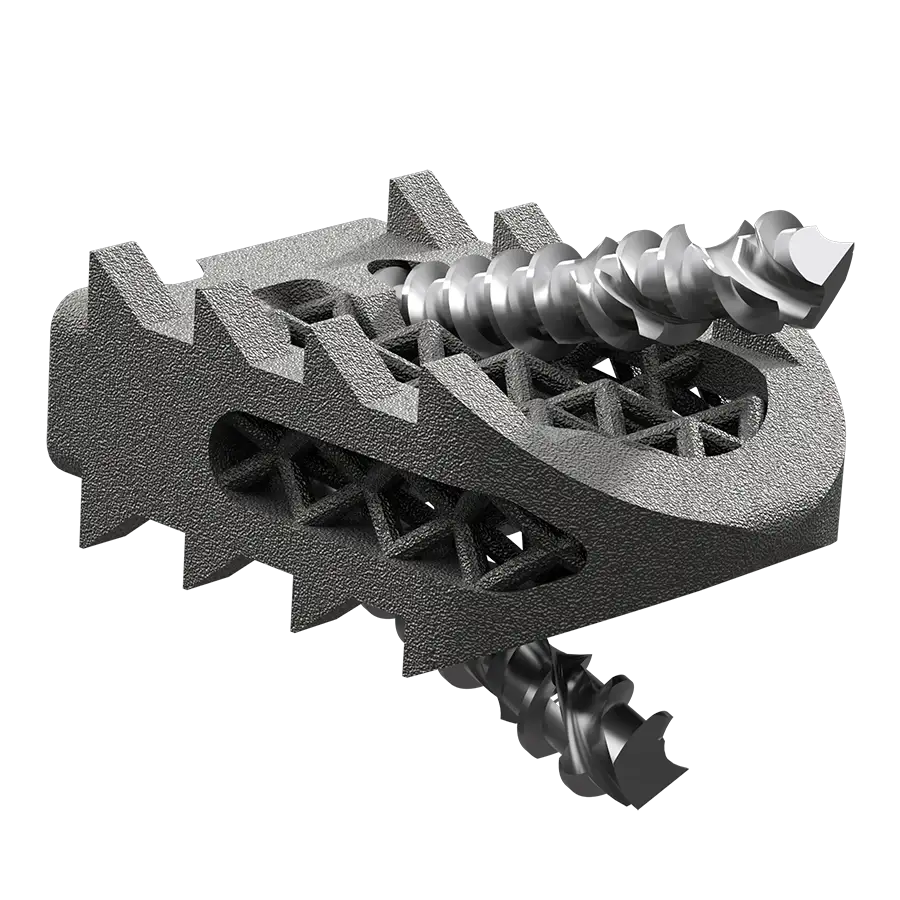
CORUS™ PCSS 3D is posterior spinal instrumentation with integrated screw fixation intended to provide immobilization and stabilization of spinal segments. 

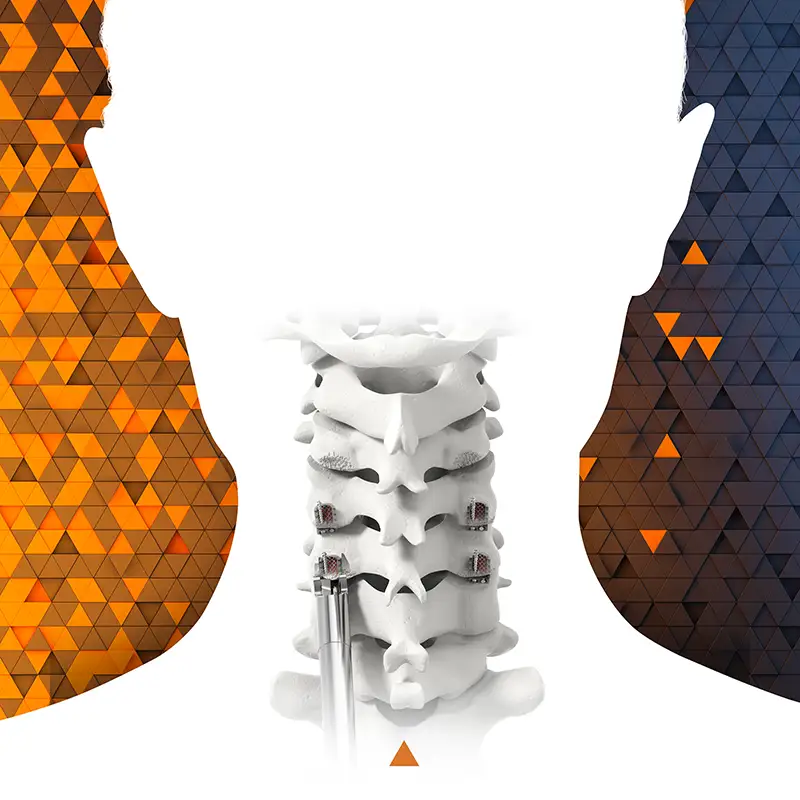
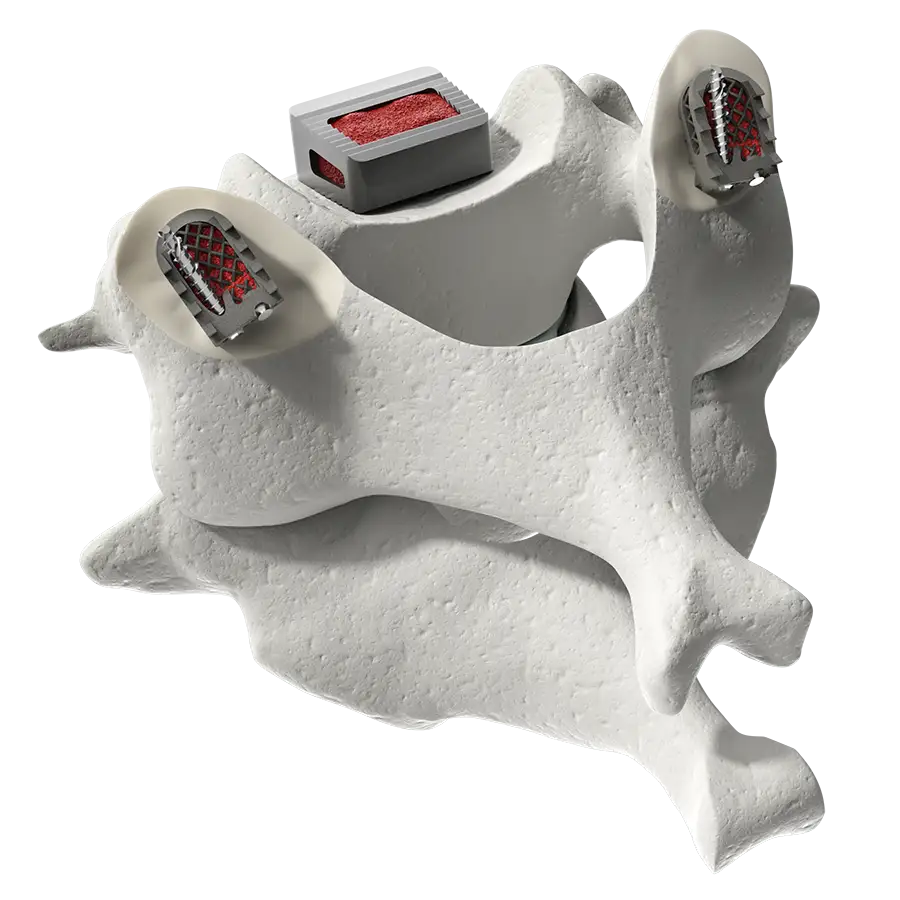
The device is placed through a posterior surgical approach in up to 3 consecutive levels of the cervical spine (C3-C7) and achieves bilateral facet fixation by spanning the facet interspace at each level with points of fixation at each end of the construct.

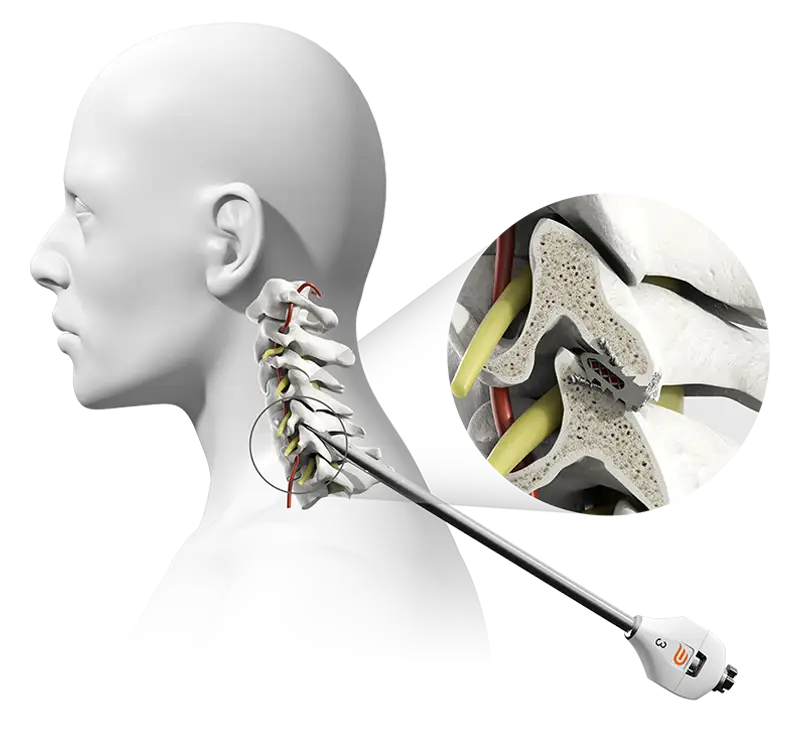
CORUS™ Spinal System is used to access and prepare the site for posterior fusion.

Patient Population

Subjects requiring 2-level adjacent (C3-C7) cervical fusion for the treatment of symptomatic cervical degenerative disc disease.
Total number of subjects treated: up to 200

Total number of subjects treated: ~200
ACDF (Control arm) ~100
CCF (treatment arm) ~100

Interventions & Study Arms

Control Arm: Anterior Cervical Decompression and Fusion (ACDF). A standard-of-care procedure that is performed using standard instruments and completed with an allograft interbody implant and anterior plate. The plate is intended to stabilize the treated levels until fusion occurs.

Treatment arm: Circumferential Cervical Fusion (CCF). A combination of ACDF and Posterior Cervical Fusion (PCF) performed during the same surgical procedure, irrespective of order. PCF procedure is performed using CORUS™ Spinal System to access and prepare the joint for fusion, followed by placement of PCSS and delivery of an allograft demineralized bone matrix (DBM).
in addition to the anterior fusion, CORUS™ PCSS 3D devices are placed bilaterally in the facet joints to achieve circumferential cervical fusion (CCF).

Learn More about Becoming a Clinical Investigator

Book a 15-minute introductory call with our VP of Clinical Affairs, Matt Jenkins

Pick a Time to Talk

Primary Endpoint & Hypothesis

The study’s primary endpoint is the demonstration of superiority in fusion success in the treatment arm (CCF) as compared to the control arm (ACDF) at 12 months post-procedure.

An individual subject is considered a fusion success if there is evidence of bridging trabecular bone across endplates and < 2° total angular motion (from flexion to extension) for all levels treated with no re-intervention.

Secondary Endpoint & Hypothesis

The study secondary endpoint is demonstration of non-inferiority for the composite safety success in the treatment arm (CCF) as compared to the control arm (ACDF) at 24 months post procedure.

An individual subject is considered a success if the following composite safety criteria are met:
  • Fusion success defined as presence of bridging trabecular bone across endplates and < 2° total angular motion (from flexion to extension) for all levels treated.
  • Neck Disability Index (NDI) success defined as improvement in NDI Score of ≥ 15/50 points in subjects with a ≥30/50 score at baseline or a 50% improvement in subjects with a baseline NDI score of <30/50 points.
  • Neurological success defined as maintenance or improvement of neurological status.
  • Absence of surgical re-interventions at the index levels.

Why Join This Study?

Advancing Patient Care:

As a clinical investigator, you’ll be part of a rigorous, randomized controlled trial designed to potentially enhance long-term, sustained stability for patients undergoing cervical fusion.

This is a high-volume procedure with significant clinical impact, and your involvement could help define the future of cervical fusion techniques. This is a unique opportunity to directly contribute to advancing surgical techniques that could significantly reduce complications and improve outcomes for patients with degenerative disc disease.

Collaboration with Industry Leaders:

This study is an opportunity to collaborate with other clinical thought leaders in the field of spine surgery, gaining valuable insights into the potential of a tissue-sparing cervical fusion device.

Innovative Technology:

The CORUS PCSS system offers a novel, tissue-sparing approach to cervical fusion. A prospective randomized clinical study found that 3-level Circumferential Cervical Fusion with CORUS PCSS delivers superior 12-month composite fusion rates compared to 3-level ACDF alone and drastically reduces revision rates within 24 months. This study will extend the same rigorous scientific approach to 2-level patients.

State-of-the-Art Data Collection:

Investigators and clinical administrators will have access to a custom app developed by Providence Medical Technology to streamline the study administration and data collection process, enhancing efficiency and reducing the administrative burden on your practice.

Past Success:

Providence has a proven track record of successful RCTs. Our recently completed FUSE Study (NCT04229017) involved over 200 subjects at 18 sites, making it the largest prospective randomized study to evaluate 3-level cervical fusion.

Next Steps:

If you are interested in learning more about the study or becoming a clinical investigator, please enter your information to start the dialogue. We’ll follow up with additional details on study protocols, timelines, and enrollment procedures.

Explore Your Future as a Clinical Investigator

Connect with Matt Jenkins, our VP of Clinical Affairs, to see if this study is the right fit.

Start the Discussion

Not Ready to Connect?
We invite you to learn more about the technology under evaluation via our Quick Study Video


Access the CORUS PCSS Surgeon Quick Study Video

INDICATIONS FOR USE, CORUS™ PCSS:

CORUS™ Posterior Cervical Stabilization System (PCSS) is posterior spinal instrumentation with integrated screw fixation intended to provide immobilization and stabilization of spinal segments.

CORUS PCSS is placed through a posterior surgical approach in up to 3 consecutive levels of the cervical spine (C3-C7) and achieves bilateral facet fixation by spanning the facet interspace at each level with points of fixation at each end of the construct.

CORUS PCSS is intended as an adjunct to posterior cervical fusion (PCF) and is only intended to be used in combination with an anterior cervical discectomy and fusion (ACDF) at the same level(s).

CORUS PCSS is indicated for skeletally mature patients with degenerative disc disease (DDD). DDD is defined as radiculopathy and/or myelopathy, neck and/or arm pain of discogenic origin as confirmed by radiographic studies.

CORUS PCSS is to be used with autogenous bone and/or allogenic bone graft.
* Strenge KB, Heller JE, Williams DM, Lemons AC, Shah RV, Nunley PD, Tender GC, Stone MB, McCormack BM, Block JE, Jenkins MB, Slee AE, Summerside EM. Three-Level Anterior Cervical Discectomy and Fusion With or Without an Investigational Posterior Stabilization System Assessed Through 24 Months: A Multicenter Randomized Controlled Trial. Spine (Phila Pa 1976). 2025 Sep 1;50(17):1161-1170. doi: 10.1097/BRS.0000000000005387. Epub 2025 May 7. PMID: 40331720; PMCID: PMC12323763.
As with all medical devices, there are risks and considerations to device use. Please refer to the device labeling for a full discussion of potential risks, contraindications, warnings, precautions, and instructions for use. Rx only.
View Product Safety Information
MKT-PMT-XXX Rev 0
Team | Innovation | Quality | Passion | Transparency
Copyright © 2025, Providence Medical Technology. All rights reserved.

Our Mission is to establish Circumferential Cervical Fusion (CCF) as the standard of care for high-risk patients.


Copyright © 2025, Providence Medical Technology. All rights reserved.